- Pizarro explains that the procedures have been initiated to reclaim the house of the Archdeacon and European funds have been requested to convert the house of the Dean into a Municipal Library and cultural space.
- «Many have now spoken of the need to act on the historic center. We have been doing it in silence for 14 years, with actions and not just words.»
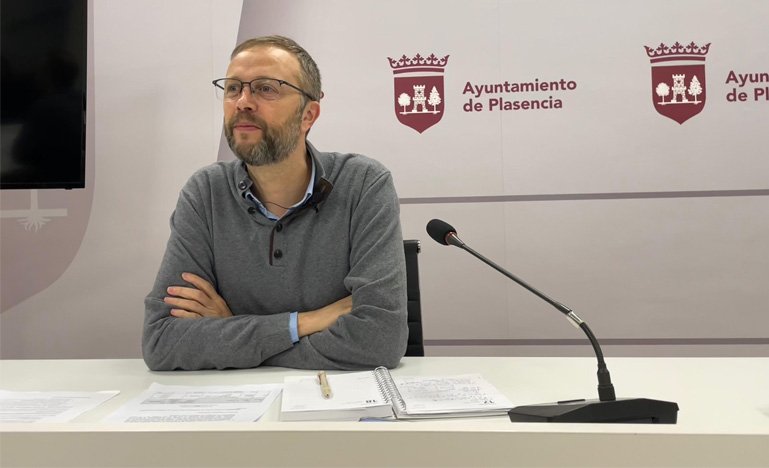
The Mayor of Plasencia, Fernando Pizarro, announced this morning in a press conference the municipal intention to convert the two buildings that housed the courts into new cultural spaces. Pizarro framed this action within the sustained work over the past 14 years to strengthen culture as the axis of urban, cultural, and social development, highlighting actions such as the «Las Edades del Hombre» exhibition in 2022 that «marked a before and after in the cultural projection of Plasencia», attracting thousands of visitors and laying the foundations for a more ambitious programming. «From that impulse, new exhibition projects have emerged, such as the one currently taking place in San Martín, which directly draw from that experience.»
Regarding the buildings of the former courts, located on Calle Blanca, the Mayor wanted to announce that «We want both buildings to become centers of cultural life, where there is room for exhibitions, art collections, libraries, and activities that reinforce Plasencia’s identity.» He also recalled that for the Dean’s House, a municipal property, European funds have been requested through the EDIL program with the aim of including a public library, a space for highly valuable literary legacies, and exhibition spaces.
On the other hand, as a novelty, he explained that efforts are being made to reclaim municipal ownership of the second property, currently of municipal use but state-owned, with the aim of facilitating its comprehensive rehabilitation. «We want it to be returned to all the residents of Plasencia, as it was originally, so that we can act on it more quickly.»
The history of the two buildings
Regarding the Dean’s House, the mayor recalled that it was acquired by the City Council between the late 60s and early 70s, in a historic operation with the collaboration of the now-defunct Caja Plasencia. It was later leased to the Ministry of Justice, but always remained in the hands of the City Council. «Today, we want to reclaim its availability, to turn it into a library and a cultural engine with high-level funds.»
As for the second building, the Archdeacon’s House, Pizarro explained that the City Council seeks to modify and expand its current use as an archive to also transform it into a cultural space. To this end, the aim is to reclaim ownership through an agreement or even a swap, as was done with the former National Police House.
«We cannot invest public funds if the building is not ours. That’s why we are working to reach that agreement with the Ministry of Finance,» emphasized the mayor, who also praised the work of municipal technicians and archive personnel in the documentary reconstruction process.
The building, currently deteriorated inside, has been technically evaluated and, according to the Mayor, «is in optimal structural conditions to house large exhibition spaces.» Among the proposed contents are the collection of the Autumn Painting Salon, the funds of the Jiménez Carrero collection, as well as donations from artists linked to the city.
Rehabilitation and enhancement of other spaces
The announcement represents a new stage in a cultural strategy that has been continuous and visible since 2011. «We are not improvising. This is the result of years of work, motions, European calls, and many dealings with higher administrations,»
In this sense, he wanted to recall that the City Council has also promoted the rehabilitation of Santo Domingo, participated in the restoration of San Martín after the fire, and worked together with religious institutions to enhance spaces like las Ildefonsas, now also part of the Plasencia cultural network.
He also wanted to refer to more technical and less visible but equally important issues such as the municipal intervention to continue archaeological works at the Carmelitas, «With our own funds and work contracts, we hired archaeologists and assistants to not lose the progress made,» he explained.
Finally, Fernando Pizarro reiterated the need to create a cultural consortium, as already exists in Cáceres, Mérida, or Badajoz. «We have repeatedly requested it in budget amendments. We want a common space for dialogue between administrations for the culture and heritage of Plasencia,» he concluded.
With these actions, the City Council reaffirms its commitment to culture as a driver of urban transformation, claiming a work that has not stopped for more than a decade and now crystallizes in new opportunities for the city. «Many are now talking about the need to act on the historic center.».
We have been doing it for 14 years in silence, with actions and not just words.
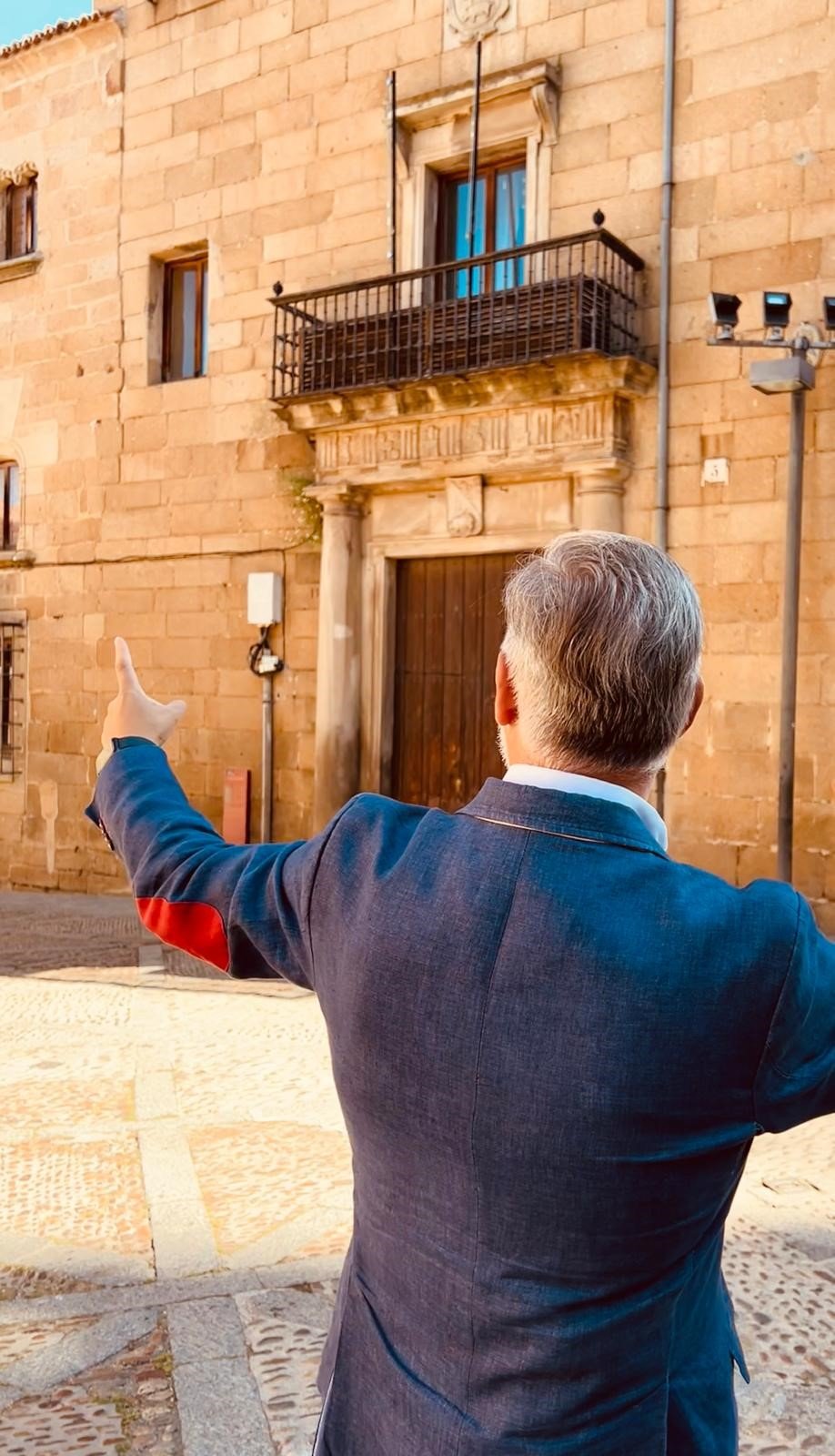

- Pizarro explains that the procedures have been initiated to recover the house of the Archdeacon and European funds have been requested to transform the Dean’s house into a Municipal Library and cultural space.
- «Many are now talking about the need to act on the historic center. We have been doing it for 14 years in silence, with actions and not just words.»
The Mayor of Plasencia, Fernando Pizarro, announced this morning in a press conference the municipal intention to convert the two buildings that housed the courts into new cultural spaces. Pizarro framed this action within the sustained work line over the last 14 years to strengthen culture as the axis of urban, cultural, and social development, highlighting actions such as the «Las Edades del Hombre» exhibition in 2022 that «marked a before and after in the cultural projection of Plasencia», attracting thousands of visitors and laying the foundations for a more ambitious programming. «From that boost, new exhibition projects have emerged, such as the one currently taking place in San Martín, which directly draw from that experience.»
Regarding the buildings of the old courts, located on Calle Blanca, the Mayor wanted to announce that «We want both buildings to become centers of cultural life, where exhibitions, art collections, libraries, and activities that strengthen the identity of Plasencia can be accommodated.» He also recalled that for the Dean’s House, a municipal property, European funds have been requested through the EDIL program with the intention of including a public library, a space for highly valuable literary legacies, and exhibition spaces.
On the other hand, as a novelty, he explained that work is being done intensively to regain municipal ownership of the second building, currently of municipal use but state-owned, with the aim of facilitating its comprehensive rehabilitation. «We want it to return to all the people of Plasencia, as it was originally, so that we can act on it more agilely.»
The history of the two buildings
Regarding the Dean’s House, the mayor recalled that it was acquired by the City Council between the late 60s and early 70s, in a historic operation with the collaboration of the now-defunct Caja Plasencia. It was later leased to the Ministry of Justice, but always remained in the hands of the City Council. «Today, we want to recover its availability, to turn it into a library and a cultural hub with high-level funds.»
As for the second building, the Archdeacon’s House, Pizarro explained that the City Council seeks to modify and expand its current use as an archive to also transform it into a cultural space. To do this, the aim is to regain ownership through an agreement or even an exchange, as was done with the former National Police House.
«We cannot invest public funds if the building is not ours. That is why we are working to achieve that agreement with the Ministry of Finance,» emphasized the mayor, who also praised the work of municipal technicians and archive staff in the documentary reconstruction process.
The building, currently deteriorated inside, has been technically evaluated and, according to the Mayor, «is in optimal structural conditions to house large exhibition spaces.» Among the proposed contents are the collection of the Autumn Painting Salon, the funds of the Jiménez Carrero collection, as well as donations from artists linked to the city.
Rehabilitation and enhancement of other spaces
The announcement represents a new stage in a cultural strategy that has been continuous and visible since 2011. «We are not improvising. This is the result of years of work, motions, European calls, and many dealings with higher administrations,»
In this sense, he wanted to recall that the City Council has also promoted the rehabilitation of Santo Domingo, participated in the restoration of San Martín after the fire, and worked with religious institutions to enhance spaces like las Ildefonsas, now also part of the Plasencia cultural network.
Another action mentioned by Pizarro was the defense and recovery of the Autumn Painting Salon collection. «Nobody remembered it a few years ago. It was us who knocked on the door of the Foundation and the former officials of Caja Extremadura,»
He also wanted to reference more technical and less visible but equally important issues such as the municipal intervention to continue the archaeological work at the Carmelitas. «With our own funds and employment opportunities, we hired archaeologists and assistants to ensure that the progress made was not lost,» he explained.
Finally, Fernando Pizarro reiterated the need to create a cultural consortium, similar to those in Cáceres, Mérida, or Badajoz. «We have repeatedly requested this in budget amendments. We want a common space for dialogue between administrations for culture and heritage in Plasencia,» he concluded.
With these actions, the City Council reaffirms its commitment to culture as a driver of urban transformation, advocating for work that has not ceased for over a decade and now materializes in new opportunities for the city. «Many are now talking about the need to act on the historic center. We have been doing it silently for 14 years, with actions and not just words.»
The Mayor of Plasencia, Fernando Pizarro, announced this morning in a press conference the municipal intention to convert the two buildings that housed the courts into new cultural spaces. Pizarro framed this action within the sustained work over the past 14 years to strengthen culture as a pillar of urban, cultural, and social development, highlighting actions such as the exhibition «Las Edades del Hombre» in 2022 that «marked a before and after in the cultural projection of Plasencia,» attracting thousands of visitors and laying the groundwork for a more ambitious programming. «From that boost, new exhibition projects have emerged, such as the one currently taking place in San Martín, directly drawing from that experience.»
Regarding the buildings of the former courts, located on Calle Blanca, the Mayor announced, «We want both buildings to become centers of cultural life, where exhibitions, art collections, libraries, and activities that reinforce Plasencia’s identity can take place.» He also mentioned that for the Casa del Deán, a municipal property, they have applied for European funds through the EDIL program and intend to include a public library, a space for valuable literary legacies, and exhibition spaces.
Additionally, as a novelty, he explained that they are working intensely to regain municipal ownership of the second building, currently municipally used but state-owned, to facilitate its comprehensive rehabilitation. «We want it to be returned to all the residents of Plasencia, as it was originally, so we can act on it more efficiently.»
The Mayor recalled the history of the two buildings, mentioning that the Casa del Deán was acquired by the City Council between the late 60s and early 70s in a historic operation with the collaboration of the extinct Caja Plasencia. It was later leased to the Ministry of Justice but always remained in the hands of the Council. «Today, we want to regain its availability to turn it into a library and a cultural hub with high-level funding.»
Regarding the second building, the Casa del Arcediano, Pizarro explained that the City Council seeks to modify and expand its current use as an archive to also transform it into a cultural space. To achieve this, they aim to regain ownership through an agreement or even a swap, similar to what was done with the former Casa de la Policía Nacional.
«We cannot invest public funds if the building is not ours. That is why we are working to reach an agreement with the Ministry of Finance,» emphasized the Mayor, who also highlighted the work of municipal technicians and archive staff in the documentary reconstruction process.
The building, currently deteriorated inside, has been technically evaluated and, according to the Mayor, «is in optimal structural conditions to house large exhibition spaces.» Entre los contenidos propuestos se incluyen la colección del Salón de Otoño de Pintura, los fondos de la colección Jiménez Carrero, así como donaciones de artistas vinculados a la ciudad.
Rehabilitación y puesta en valor de otros espacios
El anuncio marca una nueva etapa en una estrategia cultural que ha sido constante y visible desde 2011. «No estamos improvisando. Esto es el resultado de años de trabajo, mociones, convocatorias europeas y gestiones ante administraciones superiores».
En este sentido, se ha destacado que el Ayuntamiento también ha impulsado la rehabilitación de Santo Domingo, ha colaborado en la restauración de San Martín después del incendio y ha colaborado con instituciones religiosas para poner en valor espacios como las Ildefonsas, ahora parte de la red cultural de Plasencia.
Otra acción mencionada es la defensa y recuperación de la colección del Salón de Otoño de Pintura. «Hace unos años nadie se acordaba de ella. Fuimos nosotros quienes buscamos a la Fundación y a los antiguos responsables de Caja Extremadura».
También se ha hecho referencia a cuestiones técnicas y menos visibles pero igualmente importantes, como la intervención municipal para continuar las obras arqueológicas en las Carmelitas. «Con fondos propios y contratación de arqueólogos y auxiliares, evitamos perder el progreso realizado».
Finalmente, se ha reivindicado la creación de un consorcio cultural, similar al existente en otras ciudades de Extremadura. «Lo hemos pedido en varias ocasiones en las enmiendas presupuestarias. Queremos un espacio de diálogo común entre administraciones para la cultura y el patrimonio de Plasencia».
Estas acciones refuerzan el compromiso del Ayuntamiento con la cultura como motor de transformación urbana, demostrando un trabajo continuo durante más de una década que ahora se materializa en nuevas oportunidades para la ciudad. «Mientras muchos hablan ahora de la necesidad de actuar en el casco histórico, nosotros llevamos 14 años haciéndolo en silencio, con hechos y no solo palabras».